




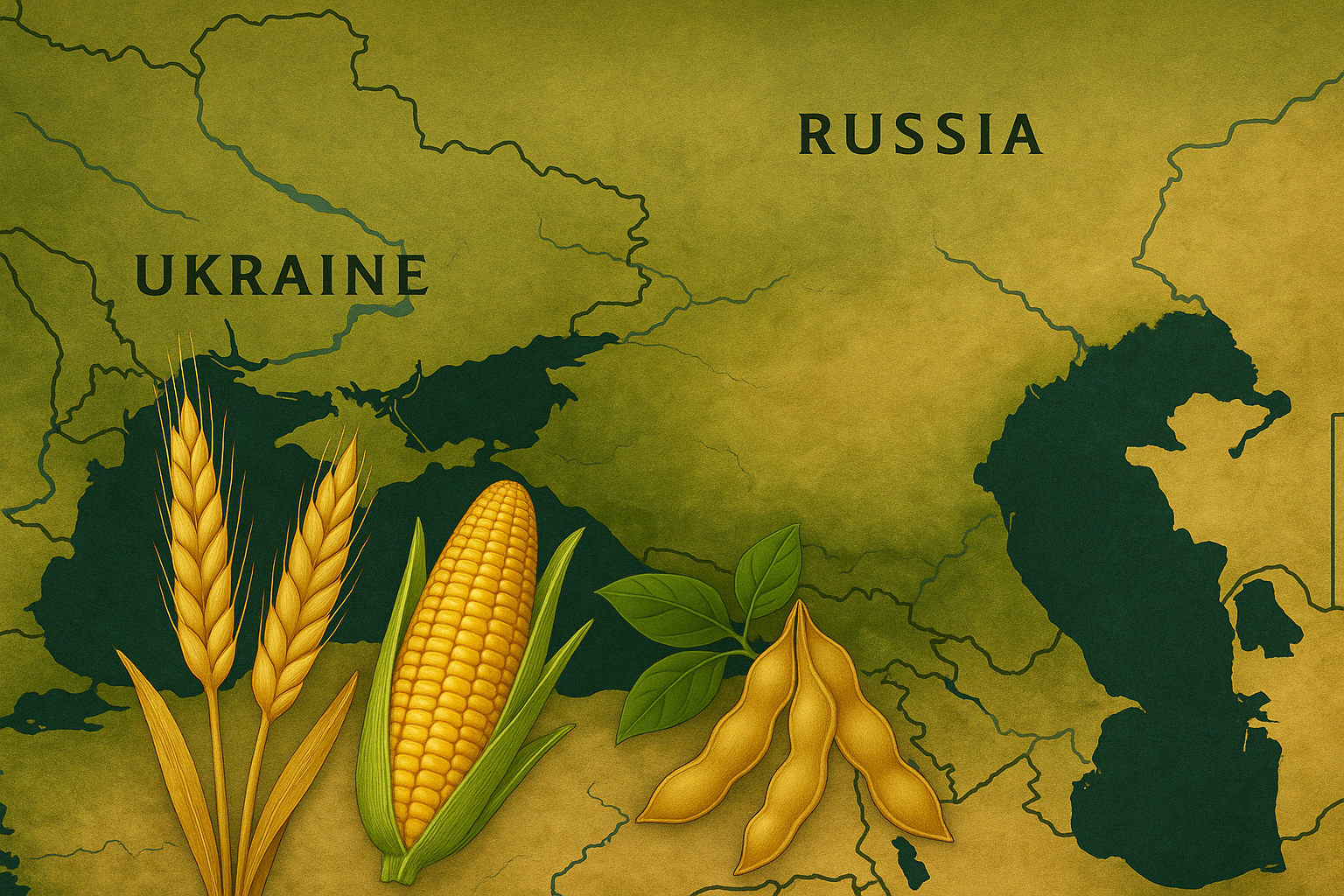
France is expecting its weakest corn harvest in 50 years, Greek cooperatives are accumulating unsold wheat in storage, and new Chinese commitments have propelled soybeans in Chicago to their strongest rally since 2023.
Heatwaves Dry Out European Soils Faster Than Rainfall Can Replenish Them
Beyond the country's borders, the picture is fundamentally different. A new study by the international scientific consortium World Weather Attribution, cited by Euronews, shows that droughts in Europe are increasingly being intensified not so much by the lack of rainfall as by extreme heat. Scientists from 12 European countries analyzed precipitation, soil moisture, and potential evapotranspiration – an indicator of the rate at which the atmosphere extracts moisture from the ground. According to the authors, long-term precipitation trends vary by region, but it is the record summer temperatures that are turning ordinary dry periods into severe droughts, as water evaporates from the soil faster than it can be replenished.
France, Romania, and Austria Suffer the Heaviest Losses
The effects of the drought are already becoming clearly visible in several key grain-producing countries. France expects its weakest corn harvest in the past 50 years, while Romania has lost more than one million hectares of arable land. The drought is also severe in Austria, where the President of the Chamber of Agriculture, Josef Moosbrugger, forecasts a grain harvest comparable to the rainy years of 2017 and 2018 – corn, sugar beet, potatoes, soybeans, sunflowers, and pumpkins are also under pressure. Austria's Chamber of Agriculture expects grain production to decline by 15% to 20% compared to last year, which would place it among the weakest harvests of the past decade. Beyond agriculture itself, the drought is putting pressure on other sectors as well – many European rivers have fallen to such low levels that they are disrupting navigation, while the energy production system is also under strain. European farmers' expectations indicate that 93% are likely to report yield losses due to the irreversible drought.
Greek Cooperatives Stockpile Wheat and Wait for a Clearer Market
The domestic durum wheat market in Greece is in a summer lull, with agricultural cooperatives in Thessaly waiting for the market to develop after harvesting and storing the new crop. Interest from traders is weak, which market participants say is typical for the season, but it offers little reassurance to producers. Cooperatives are also dissatisfied with the commercial deal achieved for the EAS Orestiada production, while comments on grain quality are just as controversial as those regarding prices – traders cite average or rather modest quality characteristics as justification for lower prices, while producers question this reasoning and point out that in previous years, when quality was better, there was no additional premium paid.
German Farmers Report a Disappointing Rapeseed Season
A survey among farmers in Germany shows that the 2026 rapeseed season has been disappointing for the majority of them – 73% of respondents reported below-average yields, 22% reported average results, and only 5% said their harvest was above average. The negative picture is repeated across all parts of the country: in Western Germany, 52% of farmers reported below-average yields, in Northern Germany the share was 65%, and in Southern Germany it reached 72%. The weakest assessment came from Eastern Germany, where as many as 92% of participants reported below-average yields and only 2% reported above-average yields. In the unofficial survey, which included a total of 1,084 respondents, the largest share came from Bavaria with 29%, followed by Saxony-Anhalt with 11%, while Lower Saxony and Thuringia each accounted for 9%.
Euronext Rapeseed Prices Reach a Three-Year High
Despite weak yields in Germany, rapeseed prices on the Euronext exchange have risen to a three-year high. The main reason cited is the escalation of the conflict between Ukraine and Russia, while an additional factor is the increase in crude oil prices, which is also pushing global vegetable oil prices higher. The combination of tighter supply in Germany and geopolitical tensions along the Black Sea corridor has placed rapeseed among the strongest-performing crops on international markets in recent weeks.
China Increases Purchases of US Soybeans
Against the backdrop of renewed momentum in trade between Beijing and Washington following the summit between the two countries' leaders in May, China has purchased more soybeans from the United States. State-owned company Cofco has contracted at least six cargoes of US soybeans for delivery between September and October. Last month, the US Department of Agriculture announced that Chinese buyers had already committed to purchasing 200,000 tonnes of US soybeans, while the White House stated that China had agreed to buy at least $17 billion worth of agricultural products, including at least 25 million tonnes of soybeans annually through 2028.
Chicago Futures Post Their Strongest Rally Since June 2023
Soybean futures in Chicago recorded little change during Asian trading after rising 3.9% on Monday, marking their largest gain since June 2023. Earlier this year, China also fulfilled a previous commitment to purchase 12 million tonnes of US soybeans after delaying those purchases for much of the period. According to reports, Beijing and Washington are seeking to remove tariffs on certain agricultural products following their latest discussions in order to preserve the broader trade truce reached last year, while Donald Trump has meanwhile stated that he expects to meet Chinese President Xi Jinping again in September.
Canada Reduces Durum Wheat Acreage
Durum wheat acreage in Canada is smaller this year. Statistics Canada reports that 2.371 million hectares were planted in 2026, compared to 2.643 million hectares in 2025, while the expected average yield is also lower at 2.60 tonnes per hectare compared with 2.75 tonnes per hectare a year earlier. On this basis, Canadian durum wheat production is expected to reach 6 million tonnes, an 8% decline from the record level of the previous season, while exports are forecast at 5.15 million tonnes – also 8% lower year-over-year, mainly due to weaker import demand from North African countries. Domestic consumption in Canada is expected to total 0.7 million tonnes, while ending stocks are forecast at 1.2 million tonnes.
Global Durum Wheat Stocks Reach a Thirty-Year High
According to Statistics Canada, global durum wheat production is expected to increase by 6% to 48.4 million tonnes, with smaller planted areas in North America offset by more favorable conditions and higher production in Morocco, Algeria, and Tunisia. Total global durum wheat production is forecast to reach a record 39.2 million tonnes, supported by higher yields in Turkey, North African countries, and Mexico. Global consumption is expected to grow by 3% annually for both food and feed, while at the same time world trade is forecast to decline by 11% due to weaker demand from North Africa and larger domestic harvests. Global ending stocks are expected to increase by 19% to 11 million tonnes – the highest level in three decades – and according to the outlook, prices are likely to remain subdued at the beginning of winter unless concerns arise over production or quality damage in Canada or the Northern Plains of the United States.